

Carried by 34 nurseries
View Availability at NurseryData provided by the participants of the Consortium of California Herbaria
View additional distribution information on the Jepson eflora
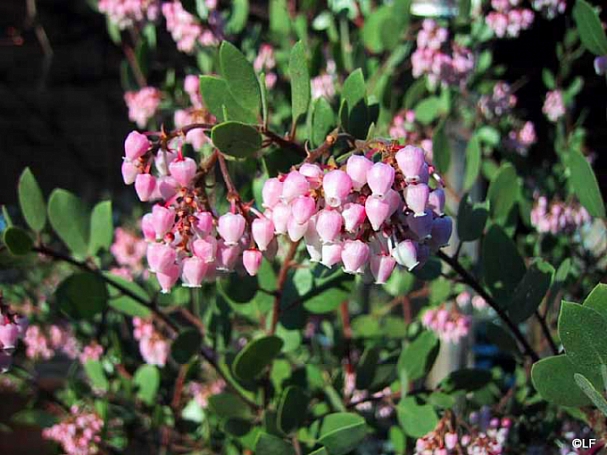
Horticultural selection from Arctostaphylos bakeri ssp. bakerii. Tolerates a wide variety of soils, but is fairly intolerant of summer water or added fertilizer. Louis Edmunds manzanita brings the form and characteristics of a large manzanita tree in a compact form much more suited to smaller gardens and landscapes. This shrub grows to a height and spread of 6 to 8 foot, with an upright form and evergreen foliage. Attractive purple bark provides year-round beauty, supplemented by pink flowers in the spring. This manzanita has gray-green foliage that contrasts beautifully with the deep purple bark. This adaptable specimen plant is known to be garden tolerant, able to grow in heavy clay soils or serpentinite, and also tolerant of loam or even decomposed granite. Adorned with pink flowers in spring, it's a delight to the hummingbirds and a fabulous addition to any landscape.
Horticultural selection A. bakeri: origin = north coast, selected by Louis Edmunds intro saratoga Horticultural Foundation 1962. Tolerates almost any soil type. Prefers sun in coastal sites, and sun or part shade in inland sites. Selected from sonoma County by saratoga Horticultural Foundation.
Shrub
6 - 8 ft Tall
4 - 6 ft Wide
Upright
slow
Evergreen

Pink
Spring
Hedge
Full Sun, Partial Shade
Low
Easy
15
Fast, Medium, Slow
Tolerates a wide variety of soils. Tolerates serpentine soil..
Plant with other north coast natives such as California Barberry (Berberis pinnata), Pt. Reyes Ceanothus (Ceanothus gloriosus), Giant Chinquapin (Chrysolepis chrysophylla), Gowan Cypress (Hespercyparis goveniana) or Monterey Cypress (Hesperocyparis macrocarpa), Western Labrador Tea (Rhododendron columbianum), Redflower Currant (Ribes sanguineum), and California Huckleberry (Vaccinum ovatum).
Thanks to Moosa Creek Nursery and the Theodore Payne Foundation for sharing information about this plant