

Carried by 3 nurseries
View Availability at NurseryData provided by the participants of the Consortium of California Herbaria
View additional distribution information on the Jepson eflora
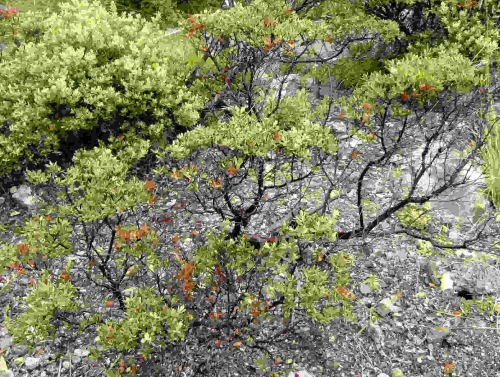
Arctostaphylos bakeri is a species of manzanita known by the common name Baker's manzanita. It is endemic to Sonoma County, California, where it grows in the chaparral and woodlands of the North Coast Ranges. It is sometimes a member of the serpentine soils flora. This is a shrub growing one to three meters in height. Its smaller twigs are bristly and hairy or hairy to woolly. The dark green leaves are generally oval in shape and up to 3 centimeters long. They may be hairy, rough or fuzzy in texture, and dull or shiny in appearance. The plentiful flower clusters hold crowded clusters of urn-shaped manzanita flowers. The fruit is a hairless drupe up to a centimeter wide. Arctostaphylos bakeri does best in nutrient-poor clay or loam soils that retain more water. While it can usually tolerate occasional summer water, it is best to stop all summer water after the first year. Arctostaphylos bakeri 'Louis Edmunds' is the standard form of this manzanita available at native plant nurseries.
Shrub
3 - 10 ft Tall
10 ft Wide
Rounded
Moderate
Evergreen

Pink
Winter, Spring
Containers, Hedge
Full Sun, Partial Shade
Very Low
Never irrigate once established
Easy
Medium, Slow
unamended well drained but tolerant of clay soils. Tolerates serpentine soil..
Slopes, open areas of coastal northern California
Chaparral, Closed-cone Pine Forest, Mixed Evergreen Forest
Plant with other north coast natives such as California Barberry (Berberis pinnata), Pt. Reyes Ceanothus (Ceanothus gloriosus), Giant Chinquapin (Chrysolepis chrysophylla), Gowan Cypress (Hespercyparis goveniana) or Monterey Cypress (Hesperocyparis macrocarpa), Western Labrador Tea (Rhododendron columbianum), Redflower Currant (Ribes sanguineum), and California Huckleberry (Vaccinum ovatum).
Butterflies and moths supported
0 confirmed and 30 likely
Western Avocado Leafroller Moth
Amorbia cuneana
Miranda Underwing
Amphipyra pyramidoides