

Carried by 10 nurseries
View Availability at NurseryData provided by the participants of the Consortium of California Herbaria
View additional distribution information on the Jepson eflora
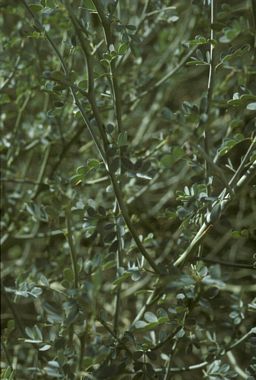
Blue Palo Verde (Parkinsonia floridum) is a native tree in the Fabaceae (Legume) famly that grows in the Sonoran Desert region of California, Arizona and Mexico. It tends to grow in washes, bajadas and flood plains, at elevations from 0-3600 feet. It is also one of the most popular trees for desert gardens. The Palo Verdes were formerly classified in the genus Cercidium, and some sources may still refer to it that way. The leaves are small and readily dropped in response to dryness. The common name refers to the green bark of the trunk and limbs which are capable of low-level photosynthesis when the tree is leafless. The attractive flowers are yellow-gold and appear in spring but can also appear in response to summer rainfall. The seed pod resembles Mesquite and is valued by numerous animals. The seed pods were also ground and eaten by native people, but it is said to be less tasty than Mesquite. The tree has spines on the newer, slender branches. A popular hybrid of this species is known as 'Desert Museum' and has no spines. Parkinsonia florida is fast growing and drought tolerant. Supplemental watering encourages faster growth but may result in weak limbs and shortened life span. It is recommended to reduce or discontinue supplemental water after the tree becomes established. In recent years Palo Verde has become more popular for non-desert gardens and appears to perform well in many settings.
Tree
26 ft Tall
20 ft Wide
Fast
Summer Semi-deciduous
None

Yellow
Spring
Full Sun
Very Low, Low
Max 1x / month once established
Easy
Fast
Typically sandy or decomposed granite.
Can be pruned to shape at any time, but caution should be used due to the spines
By seed. In suitable habitat it tends to produce numerous seedlings
7, 8*, 9*, 10, 11, 12*, 13*, 14*, 19*, 20*, 21*, 22*, 23*, 24
Mesas, bajadas, canyons, washes, and flood plains of the Sonoran Desert
Creosote Bush Scrub
Good companions could include Desert Agave (Agave deserti), Elephant Tree (Bursera microphylla), Desert Lavender (Condea emoryi), Brittlebush (Encelia farinosa or actonii), Barrel Cactus (Ferocactus cylindraceus), Ocotillo (Fouquieria splendens), Chuparosa (Justicia californica), Desert Ironwood (Olneya tesota), Joshua Tree (Yucca brevifolia), Mojave Yucca (Yucca shidigera), and numerous species of cactus and desert annuals
Butterflies and moths supported
0 confirmed and 4 likely
Forsebia Moth
Forsebia cinis
Juno Buckmoth
Hemileuca juno
The Darter
Melipotis acontioides
Black-tipped Rudenia Moth
Rudenia leguminana