

Carried by 23 nurseries
View Availability at NurseryData provided by the participants of the Consortium of California Herbaria
View additional distribution information on the Jepson eflora
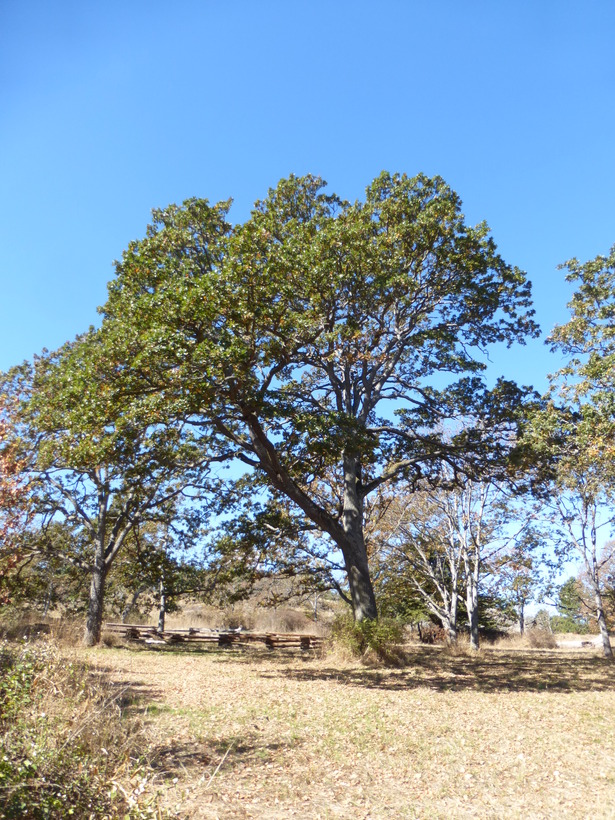
The Garry Oak (Quercus garryana), also known as Oregon White Oak or Oregon Oak, is a member of the Fagaceae family (Beeches, Chestnuts and Oaks). It has a range from the mountains of Los Angeles County northward to British Columbia, Canada, particularly in the foothills of the Siskiyou and Klamath Mountains, the Coast Ranges of Northern California, and of the west slope of the Cascades. It grows from sea level to 210 meter altitude in the northern part of its range, and at 300-1800 meter in the south of the range. There are three recognized varieties with largely overlapping ranges. The tree is named after Nicholas Garry, deputy governor of the Hudson's Bay Company, 1822-35. In the northerm part of its range it is an attractive tree, sometimes reaching 90 ft. but more often 50-60 ft. In the southern part of its range it is more often a shrub to 20 ft. It has large, lobed leaves which it drops in winter. It makes an excellent tree or shrub for mountain gardens and is important for wildlife.
Tree, Shrub
20 - 90 ft Tall
30 ft Wide
Upright
Moderate, Slow
Winter Deciduous

Yellow, Cream, Green
Spring
Bank stabilization, Deer resistant
Full Sun, Partial Shade
Low
Max 2x / month once established
Easy
Tolerates cold to -5° F
Medium
Accepts a variety of soils but performs best in rich, loamy soil.
Soil PH: 5.0 - 7.0
As with other oaks, best to prune during July or August, when the trees are not normally growing, and when the dry weather is less likely to support pathogens that may attack the wounds. As much as possible, avoid pruning large limbs as this exposes the tree to possible infection and can take many years to recover. Avoid over-thinning interior branches or "lion tailing."
For propagating by seed: Fresh seeds sow in fall outdoors or stratify to hold for spring sowing. (USDA Forest Service 1974).
Slopes
Chaparral, Mixed Evergreen Forest, Northern Oak Woodland, Red Fir Forest, Yellow Pine Forest
Works well with a number of other trees and large shrubs including Firs (Abies spp. and Pseudotsuga spp.), Madrone (Arbutus menziesii), Manzanita (Arctostaphylos spp.), Incense Cedar (Calocedrus decurrens), Ceanothus spp., Mountain Mahogany (Cercocarpus betuloides), Silk Tassel (Garrya spp.), Oceanspray (Holodiscus discolor), Pines (Pinus spp.), Redberry (Rhamnus crocea), Currant/Gooseberry (Ribes spp.) and Snowberry (Symphoricarpos albus). Understory plantings could include strawberry (Fragraria spp.), Iris spp., and Violets (Viola spp.)
Butterflies and moths supported
38 confirmed and 138 likely
Pale-headed Aspen Leafroller Moth
Anacampsis niveopulvella
Polyphemus moth
Antheraea polyphemus
Rusty Shoulder Knot Moth
Aseptis binotata