

Carried by 7 nurseries
View Availability at NurseryData provided by the participants of the Consortium of California Herbaria
View additional distribution information on the Jepson eflora
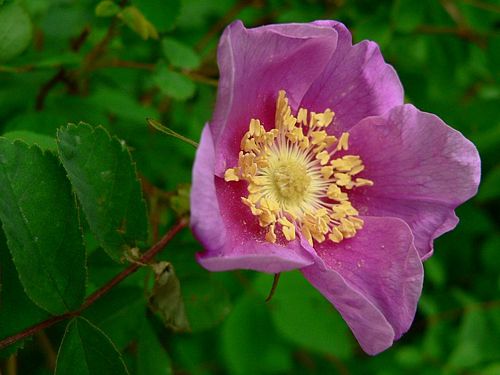
The Nootka Rose, Rosa nutkana, is a rose which is native to the Pacific Northwest. It takes its name from the Nuu-chah-nulth people, who are commonly though incorrectly known also as the Nootka. In California it is most commonly found near the coast from Sonoma County to Del Norte County. Like other wild roses, it prefers moist areas and will become a large, impenetrable thicket. The spines can be rather dangerous so don't plant near walkways. One plant association in which this rose occurs is the Ponderosa shrub forest.
Shrub
6 - 10 ft Tall
Upright
Fast
Winter Deciduous
Pleasant

Red, Pink
Spring
Full Sun, Partial Shade, Deep Shade
Low, Moderate, High
Max 1x / week once established
Easy
Tolerates cold to -20° F
Fast, Medium, Slow
Tolerates sandy or clay soil as long as adequate moisture is available.
Soil PH: 4.0 - 7.0
Prune in winter if needed to control spread
For propagating by seed: 5 mos. stratification; preceding this by 2-3 mos. warm stratification may improve germination (USDA Forest Service 1974).
Moist flats, wet meadows, stream banks, canyon bottoms
Mixed Evergreen Forest, Redwood Forest, Wetland-Riparian
Use with other plants of the north coast such as
Trees: Redwood (Sequoia sempervirens), Grand Fir (Abies grandi), Maple (Acer spp.), Alder (Alnus spp.), Dogwood (Cornus spp.), Ninebark (Physocarpus capitatus), Pines (Pinus spp.), Willow (Salix spp.), Coast Silktassel (Garrya elliptica), Tanoak (Notholithocarpus densiflorus), Douglas Fir (Pseudotsuga menziesii), Oak (Quercus garryana or kelloggii)
Other companions: Stream Orchid (Epipactis gigantea), Bog Orchid (Platanthera spp.), Oceanspray (Holodicsus discolor), Lily (Lilium spp.), Seep Monkeyflower (Erythranthe guttata), Buttercup (Ranunculus spp.), Gooseberry (Ribes spp.), Yellow-eyed Grass (Sisyrinchium californicum), Hedgenettle (Stachys spp.), Oregon Grape (Berberis nervosa)
May also be used with some rare, carnivorous plant such as Darlingtonia and Drosera.
Butterflies and moths supported
0 confirmed and 52 likely
Brittania Moth
Acleris britannia
Destructive Pruneworm Moth
Acrobasis tricolorella
Yellow-Haired Dagger Moth
Acronicta impleta