

Carried by 1 nurseries
View Availability at NurseryData provided by the participants of the Consortium of California Herbaria
View additional distribution information on the Jepson eflora
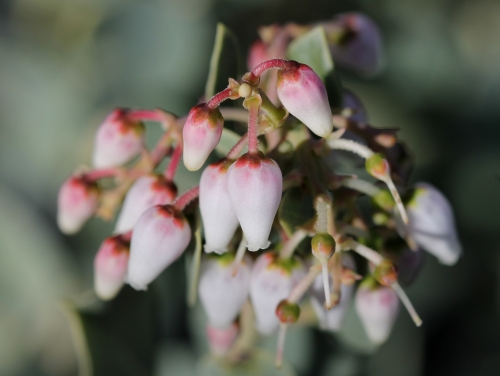
Arctostaphylos glandulosa ssp. glandulosa, or Eastwood Manzanita, is a beautiful low-growing manzanita that grows primarily in the western foothills and mountain ranges of California. It tends to grow in rocky outcrops, slopes and ridges, at elevations from 1000-6200 feet. Very diverse with many varieties; a common species of disagreement among botanists.
Leaf colors vary from a vibrant yellow-green to grey green to dark green, depending on the season and the amount of water. Flowers are white to light pink and attract hummingbirds. Bark is red and become gnarled with age. When burned, this plant resprouts from its basal burl and can reach very old ages.
It seems to do best if planted in the spring, when it can grow quickly and establish itself before the dry summer months. It handles weekly water for the first year after planting, after which it's best to naturalize. Plant on slopes or well draining flats. It will look green and vibrant year round if it can stretch its roots out to a nearby damper spot or irrigated area. It likes sun or part shade.
Shrub
3 - 10 ft Tall
3 - 10 ft Wide
Rounded
Moderate, Slow
Evergreen
Slight

Pink, White
Winter, Spring
Full Sun, Partial Shade
Low, Very Low
Max 1x / month once established
Moderate
Tolerates cold to -10 - 0° F
Fast
Rocky, well draining soil.
Soil PH: 6 - 8
5, 7, 14, 15*, 16*, 17*, 18, 19, 20, 21, 22, 23, 24
Rocky outcrops, slopes, ridges
Mixed Evergreen Forest, Chaparral
Scarlet Keckiella (Keckiella ternata), Snapdragon Penstemon (Keckiella antirrhinoides), Desert Apricot (Prunus fremontii), Chamise (Adenostoma spp.), Desert Ceanothus (Ceanothus greggii), Scrub Oak (Quercus berberidifolia), Mountain Mahogany (Cercocarpus betuloides), Tecate Cypress (Hesperocyparis forbesii), Yucca species, Buckbrush (Ceanothus cuneatus), Coast Live Oak (Quercus agrifolia), Hummingbird Sage (Salvia spathacea), Black Sage (Salvia mellifera), Summer Holly (Comarostaphylis diversifolia), Mission Manzanita (Xylococcus bicolor)
Butterflies and moths supported
0 confirmed and 55 likely
Western Avocado Leafroller Moth
Amorbia cuneana
Miranda Underwing
Amphipyra pyramidoides