

Carried by 9 nurseries
View Availability at NurseryData provided by the participants of the Consortium of California Herbaria
View additional distribution information on the Jepson eflora
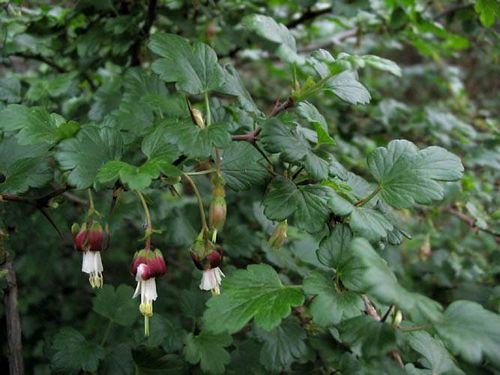
Hillside Gooseberry (Ribes californicum) is an easy to grow native shrub. Hillside Gooseberry tends to grow in moist places, at elevations from sea level to nearly 6,000 feet. It will reach 4 to 8 feet high and 2 to 6 feet wide. The dangling flowers, which appear in spring, are pink, purple or yellow. The branches bear spines, so keep this in mind when deciding the planting location.
This plant will grow in part-shade, in sandy or rocky soil, and requires little water once established.
The flowers are very attractive to hummingbirds and the berries make it a valuable wildlife plant, especially to birds. It hosts several butterfly species, including the Tailed Copper, Hoary Comma and Oreas Comma.
Shrub
3 - 8 ft Tall
2 - 6 ft Wide
Summer Deciduous, Winter Deciduous

Pink, Purple, Yellow
Winter, Spring
Deer resistant
Partial Shade
Low, Very Low
Max 1x / week once established
Easy
Tolerates cold to 15° F
Fast, Medium
Tolerates sandy soil.
Soil PH: 5.4 - 7.3
Easily started from cuttings taken in late winter
Canyons, stream sides, and similar places in the Coast Ranges and Transverse Range
Chaparral, Foothill Woodland, Mixed Evergreen Forest, Redwood Forest
Use with other forest/woodland plants of the coastal mountains, such as Columbine (Aquilegia spp.), Coast Barberry (Berberis pinnata), Ceanothus spp., Yerba Buena (Clinopodium douglasii), Coffeeberry (Frangula californica), Silk Tassel Bush (Garrya elliptica or fremontii), Ocean Spray (Holodiscus discolor), Douglas Iris (Iris douglasiana), Tanoak (Notholithocarpus densiflorus), Polypody Fern (Polypodium californicum), Snowberry (Symphoricarpos albus or mollis), Meadow Rue (Thalictrum fendleri), Common Trillium (Trillium chloropetalum), and Huckleberry (Vaccinium ovatum)
Butterflies and moths supported
0 confirmed and 81 likely
Milbert's Tortoiseshell
Aglais milberti
Western Avocado Leafroller Moth
Amorbia cuneana