

Carried by 9 nurseries
View Availability at NurseryData provided by the participants of the Consortium of California Herbaria
View additional distribution information on the Jepson eflora
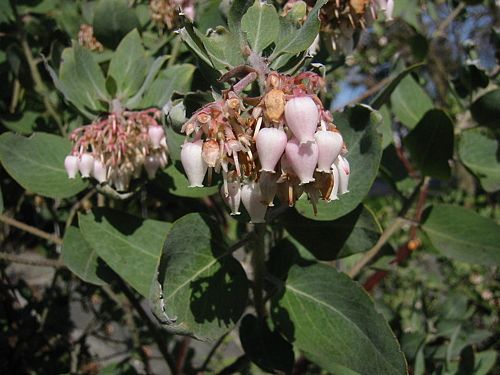
Arctostaphylos viscida is a species in the Ericaceae (Heath) family known by the common names whiteleaf manzanita and sticky manzanita. This is a treelike shrub reaching up to five meters in height. The stems may be smooth or fuzzy, and are often hairy. The leaves are rounded to oval, sometimes slightly toothed or with hairs along the edges, and usually dull green on both surfaces. When in flower the shrub is packed heavily with densely bunching flower clusters of urn-shaped white to pale pink flowers. The fruits are shiny red or greenish-brown drupes between one half and one centimeter wide. Seeds require fire for germination. This is a plant of chaparral and coniferous forests of 3,000-5,000 ft. elevation. It is native to California and Oregon. The Miwok of northern California used the fruits to make cider.
Shrub
8 - 16 ft Tall
12 ft Wide
Mounding, Rounded
Moderate
Evergreen
Slight

Pink, White, Green
Winter, Spring
Full Sun, Partial Shade
Low, Very Low
Max 2x / month once established
Moderate
Tolerates cold to 0° F
Fast, Medium, Slow
Tolerates a variety of soils including clay and decomposed granite.
Tolerates serpentine soil..
Soil PH: 6.0 - 7.8
By seed or cuttings
Rocky slopes of the Sierra foothills, Klamath Range, and northern portion of the Coast Ranges
Chaparral, Foothill Woodland, Yellow Pine Forest
In the wild it grows with Gray Pine (Pinus sabiniana), California Ash (Fraxinus dipetala), Holly-leaf Redberry (Rhamnus ilicifolia), Fragrant Sumac (Rhus aromatica), Interior Live Oak (Quercus Wislizenii), Mountain Mahogany (Cercocarpus betuloides), Buck Brush (Ceanothus cuneatus), Blue Oak (Quercus douglasii), Ponderosa Pine (Pinus ponderosa), and Incense Cedar (Libocedrus decurrens).
Butterflies and moths supported
1 confirmed and 55 likely
Western Avocado Leafroller Moth
Amorbia cuneana