

Carried by 47 nurseries
View Availability at NurseryData provided by the participants of the Consortium of California Herbaria
View additional distribution information on the Jepson eflora
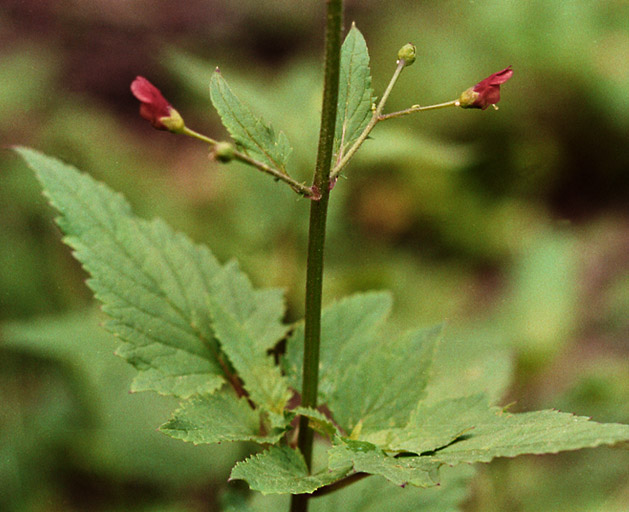
California bee plant (Scrophularia californica) is a perennial in the Figwort family (Scrophulariaceae). The flowers are red to maroon and are so small that they are easy to miss. The wedge -shaped light green leaves are much larger than the flowers.
As the name suggests, bees are extremely attracted to the flowers. An important food source for small wasps and hummingbirds, it is also a host plant for the Chalcedon Checkerspot and Common Buckeye butterflies.
Bee plant grows in several habitats, including Wetland-Riparian, Coastal Sage Scrub, Pine Forests, Chaparral, and Redwood Forest. In moist soils it will form large colonies, but it can also successfully be grown in a pot.
Plant bee plant in the back of a perennial border where the tall stems won't block out shorter perennials, and where it can blend in when not in flower. Bee Plant flowers look like small, red jewels when backlit by the sun.
Perennial herb
2 - 4 ft Tall
1 - 3 ft Wide
Upright
Fast
Evergreen
Slight

Red
Spring, Winter
Deer resistant
Partial Shade
Low
Max 2x / month once established
Easy
Tolerates cold to 20F° F
Fast, Medium
Adaptable to garden soils.
Soil PH: 5.2 - 8.2
4*, 5*, 6*, 7, 8, 9, 14*, 15*, 16*, 17*, 18*, 19*, 20*, 21*, 22*, 23*, 24*
Slope bottoms, north facing slopes, slightly moister places that receive 11-85 inches of rain per year.
Chaparral, Northern Coastal Scrub
Seep Monkey Flower (Erythranthe guttata), Bentgrass (Agrostis exarata), Variegated Clover (Trifolium variegatum), Arroyo Willow (Salix lasiolepis), Narrowleaf Milkweed (Asclepias fascicularis), White Alder (Alnus rhombifolia), Common Buttercup (Ranunculus californicus), Common Horsetail (Equisetum arvense), Indian Hemp (Apocynum cannabinum), Creek Clematis (Clematis ligusticifolia), Columbine (Aquilegia formosa), Wire Rush (Juncus balticus), Narrowleaf Willow (Salix exigua), California Mugwort (Artemisia douglasiana), Red Willow (Salix laevigata), California Blackberry (Rubus ursinus), Thimbleberry (Rubus parviflorus), California Wild Rose (Rosa californica), Mulefat (Baccharis salicifolia), Golden Yarrow (Eriophyllum confertiflorum), Showy Penstemon (Penstemon spectabilis)
Butterflies and moths supported
7 confirmed and 5 likely
Geranium Plume Moth
Amblyptilia pica
Orange Tortrix Moth
Argyrotaenia franciscana